
WSDA: A ‘Critical Partner’ in 2025 Elections
Quick Bites
- This fall, WSDA’s political action committee, DentPAC, was a major player in supporting two legislative candidates with ties to the Association.
- While both candidates lost close races in a challenging electoral environment, WSDA expects to reap benefits from its DentPAC investments.
- Political observers noted that the Association’s willingness to commit resources to these campaigns drew attention and respect within the business community.
- DentPAC contributions are just one of several areas where WSDA is increasing its political and policy advocacy engagement.
During this November’s general election, WSDA sent an important message: the Association will strongly back candidates who support dental professionals and their patients.
WSDA’s political action committee, DentPAC, was the largest single contributor to Enterprise Washington — a pro-business political action committee coordinating independent expenditures in support of Rep. Michelle Caldier, the dentist who has represented the 26th Legislative District in the House of Representatives for the past decade. Caldier, a Republican, ran for the district’s senate seat against Sen. Deb Krishnadasan (D-Gig Harbor) who was appointed to the seat when Emily Randall was elected to Congress.
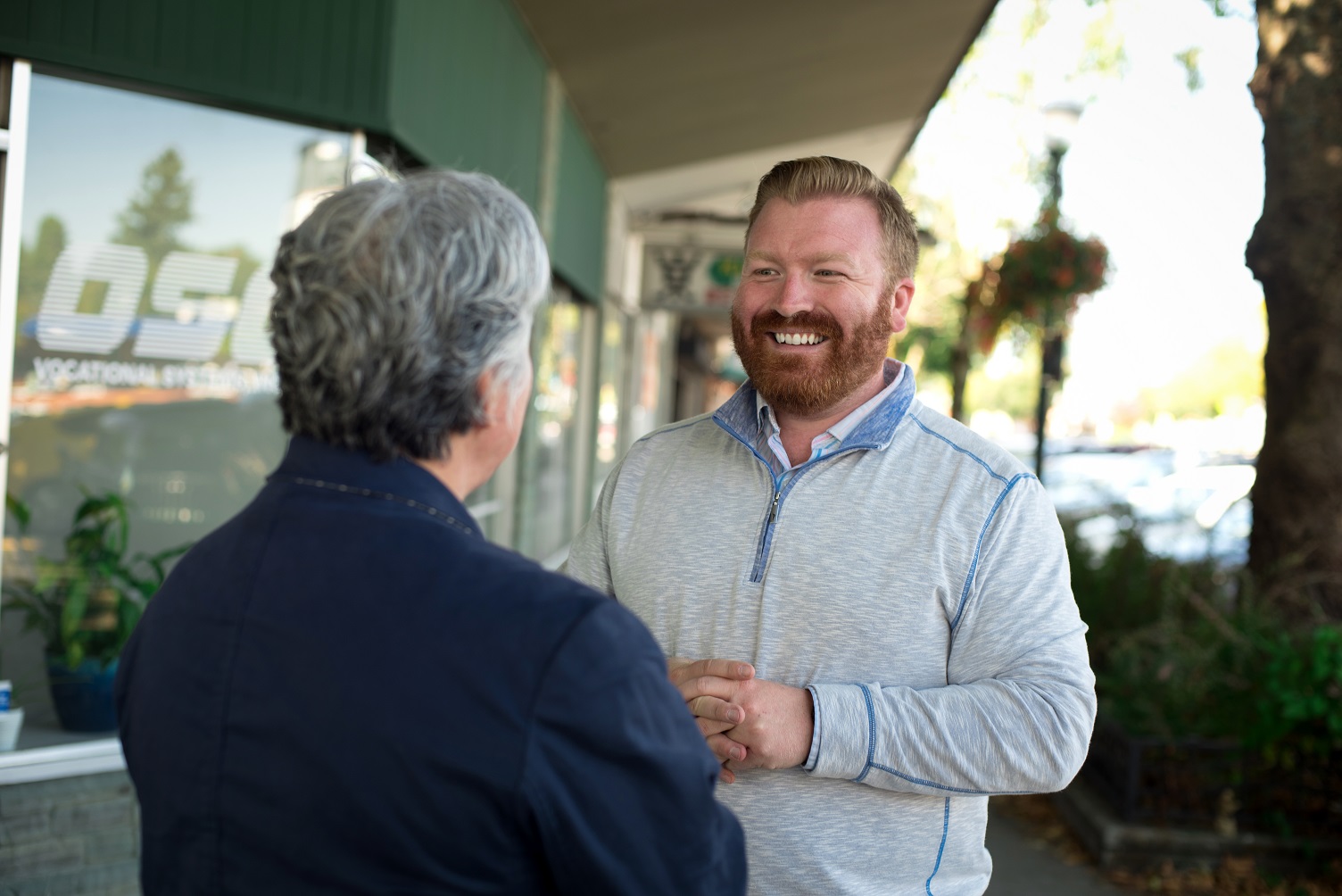
DentPAC was also the largest contributor to Pragmatic WA, another political action committee providing independent support for Kevin Schilling, WSDA’s advocacy director and mayor of Burien. Running for the House of Representatives in the 33rd Legislative District, Schilling, a Democrat, looked to unseat Rep. Edwin Obras (D-SeaTac), who had been appointed to the position when Tina Orwall was appointed as the district’s state senator.
Although both Caldier and Schilling came up a little short in their election bids — their races were the closest of the fall legislative special elections — DentPAC Chair Dr. Cynthia Pauley sees the Association reaping other benefits from the PAC’s aggressive investments in their campaigns.
“Given the national political landscape, this was a really tough year for moderate candidates challenging more liberal Democratic incumbents,” said Pauley. “Both Michelle and Kevin worked hard and ran really strong campaigns, and I think both of them should be very proud of the way they campaigned. We all will benefit from the way they conducted themselves and represented the dental community on the campaign trail.”
Pauley pointed out that Caldier retains her House seat — she will have to stand for reelection in 2026 in order to remain in the Legislature — and will continue to be a key member of the House Health Care & Wellness Committee.
Schilling, meanwhile, gathered a number of endorsements from prominent Democratic elected officials, garnered strong editorial endorsements including The Seattle Times, and was recognized as a hard-working candidate — all factors that enhance his reputation and stature working on WSDA’s behalf in Olympia.
Both candidates expressed similar sentiments when the election results became clear: a mix of disappointment in the outcome, gratitude from those who supported their campaigns, and a commitment to continue fighting the good fight.
“While I’m disappointed in the outcome, I’m incredibly grateful for everyone who stood with me in this campaign to bring balance back to Olympia,” Caldier said in her concession announcement. “Though this race has ended, my commitment to standing up for the people of the 26th District has not. Thank you to everyone who believed in our message and fought alongside me for a safer, more affordable Washington.”
Schilling, who personally knocked on more than 15,000 doors in his district during the campaign, was similarly energized by the election process, if not the result.
“I want to thank everyone who stood with me in this campaign to push against extremism of all kinds and for common sense solutions to our statewide issues around taxes, public safety, and government accountability,” he said. “Though this race has ended, my commitment to standing up for common sense and accountability has not. I’ll continue to do that as a Burien City Councilmember until my term ends at the end of 2027, as well as with the Washington State Dental Association to provide better and more accessible health care to patients.”
Growing Political Influence
WSDA Executive Director Bracken Killpack believes the return on WSDA’s campaign investments will extend well beyond the reputations and stature of the two candidates themselves and their ability to be effective advocates for the Association’s policy agenda.
“Money is not the only measuring stick in politics, but it’s an important one,” Killpack said. “Our strategic engagement in the 26th and 33rd District races this year clearly demonstrated that WSDA not only has resources, but we are willing to use them aggressively to help those who understand the need for better oral health outcomes in Washington and the vital importance of protecting the doctor-patient relationship in making that happen.”
“While we have long been recognized as an active player in Olympia, I know that we opened a few additional eyes within the business community this campaign season with our level of commitment.”
Killpack is not the only one who sees WSDA’s stature in the political arena growing as a result of recent efforts.
"WSDA played a massive, bipartisan role in this year's legislative elections."
“Without a doubt, the Washington State Dental Association’s efforts this year marked it as a leader in the broader business community,” said Paul Graves, president of Enterprise Washington, the campaign arm of the state’s business community.
“WSDA played a massive, bipartisan role in this year’s legislative elections. On its own, and working with groups like Enterprise Washington, WSDA contributed substantial time, expertise, and resources in the ongoing fight for a common-sense legislature. While the results weren’t what we were hoping for, WSDA was a critical partner, and I expect will remain among the state’s most effective bipartisan organizations in the future.”
"WSDA really put the Kevin Schilling race in the 33rd on the map."
Another political expert saw things similarly. Sandeep Kaushik, a political consultant with Seattle-based Sound View Strategies, believes WSDA has gained significant visibility and credibility in Washington’s political sphere as a result of the Association’s involvement in the 2025 election.
“I think the dental association really stepped up to fill a gap in this election cycle within the business community,” said Kaushik. “[WSDA] really put the Kevin Schilling race in the 33rd on the map. Before they got involved, the business community was on the verge of taking a pass on that race. And while Kevin fell short, it was one of the closest — if not THE closest — race for candidates that were more supportive of the business community.”
“While it wasn’t enough to win in this instance, it made a huge difference, without a doubt,” added Kaushik. “This has demonstrated that the dental association can be a major player in Washington state politics, and I would assume that this would be the case going forward.”
Grassroots Engagement Essential for Success
Individual and organizational reputations will only help advance your policy agenda so far in Olympia. And money, despite its importance, will only take you so far, too. The final — and necessary — leg on the stool of political effectiveness is grassroots engagement with lawmakers. Legislators respond to personal contacts that spell out how the policies under consideration impact real people.
WSDA’s experience in the 2025 legislative session is a case in point. On a variety of important issues, hundreds of member dentists answered the call time and again to contact their elected representatives. Some of these conversations took place face-to-face during Dental Action Day, while other messages were delivered via phone calls, emails or text messages.
Regardless of the medium, the message was clear and consistent — the current dental benefits system in Washington is broken, and changes need to be made to better serve patients. Lawmakers heard example after example illustrating these points, and as a result, WSDA’s dental benefits reform legislation moved through Olympia without a single dissenting vote at any step in the process.
Bans on same-day denials and virtual credit card payment requirements have already taken effect as a result of the bill. Two even more important issues — establishment of a minimum dental loss ratio for all dental insurance plans and establishment of parity for out-of-network benefit reimbursements — are currently being studied in a legislatively mandated mediation process under the auspices of the Ruckelshaus Center, a nonpartisan public policy organization jointly housed at the University of Washington and Washington State University.
And dental benefits reform was not the only issue on which member dentist engagement had a meaningful impact. Near the end of the session, as the Legislature scrambled to pass a biennial budget, one of the proposals on the table was an increase in business and occupation taxes that would have taxed $3,500 per $1,000,000 collected for most dental offices. WSDA members joined with other health care professionals to successfully argue that any tax increase on their services would simply increase patient costs and decrease access to care and avoided this tax increase for Washington dentists.
From his front-row seat, Schilling recognizes the importance of these interactions.
“From my conversations with legislators of both parties, and from my own experience as a local elected official, I know that there is a real difference between hearing just from lobbyists and hearing from constituents who take the time to explain what an issue means for them and the people they care about,” Schilling said. “Hearing from individual Association members is just much more powerful.”
"The dental association can be a major player in Washington state politics."
With key dental benefits reforms yet to be resolved, the need to increase the dental workforce, and other pressing issues still in play, it should come as no surprise that WSDA’s investments in the political arena go beyond DentPAC contributions to candidates. As examples, the Association has added staff expertise on key issues and built up its member communications and mobilization capabilities.
According to Killpack, these investments are critical for the future of dentistry in Washington state.
“So much of what goes on in Olympia has a direct bearing on whether or not our members can be successful,” said Killpack. “Whether it’s dental benefits reforms, addressing critical dental workforce shortages, or addressing typical small business issues like taxes and new regulations, we have to be effective in helping lawmakers understand how their decisions impact patients’ access to high-quality, cost-effective oral health care.”
“We are blessed with a strong and engaged membership,” he added, “and I believe that they will continue to contribute their time and energy to our advocacy efforts on their behalf.””
Sign Up for Advocacy Text Alerts
Join our network of grassroots advocates! Text “WSDA” to the number 52886 to sign up to take action on critical dental issues easily from your phone at the moments they’re needed most.
This article originally appeared in Issue 4, 2025 of the WSDA News.
