
Faith, Family & Friends: Dr. Kim Nordberg, WSDA 2025 Citizen of the Year
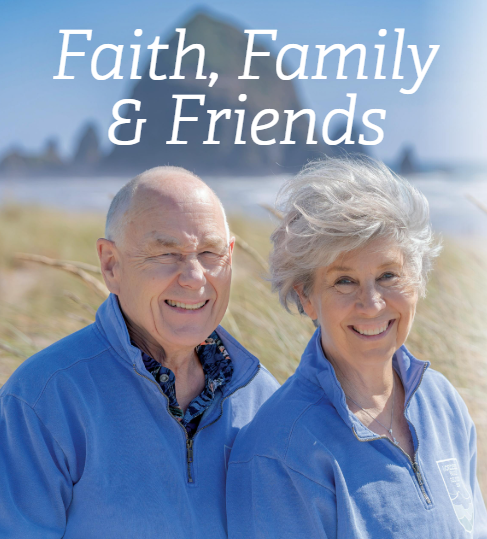
Celebrating a Life of Service: To watch a short video profile of 2025 Citizen of the Year Dr. Kim Nordberg, go to www.wsda.org/2025COY.
Quick Bites
- The late Dr. Kim Nordberg is WSDA’s 2025 Citizen of the Year.
- Nordberg and his wife Bette were killed in a tragic car accident in 2024.
- Nordberg spent nearly two decades traveling annually to Guatemala to serve residents of poor, rural villages.
- These mission trips also allowed him to mentor dental student participants.
- Nordberg was also an active volunteer helping to steer WSDA’s strategies for dental benefits reform.
- Nordberg was deeply religious, and his volunteer efforts reflect the Christian commitment to serving others.
- All four Nordberg children have pursued careers serving others: two dentists, one nurse practitioner, and one teacher.
What is the best way to measure Dr. Kim Nordberg’s legacy?
It’s not in buildings, though that could be part of the answer. Nor is it in accolades and awards, though there were those, too, including being honored as this year’s recipient of the WSDA Citizen of the Year award.
"Our family was naturally exposed to serving others from a young age."
Lives will continue to be touched for decades to come, as Nordberg’s four children have all earned graduate degrees enabling them to pursue careers that embody service to others. His two sons both studied and began careers in engineering before eventually changing course to follow their father into dentistry: Peder, as a general practitioner who was his father’s partner for 12 years, and Eric, as an orthodontist whose office is located just across the parking lot. Daughter Molly Kerns is an elementary music teacher in Yakima and her younger sister, Maggie Gustafson, is a nurse practitioner in Bellingham.
That’s no mere coincidence, according to Maggie. “Our family was naturally exposed to serving others from a young age — and it felt natural to choose something in that area,” she said.
A Tragic Accident
This year’s WSDA Citizen of the Year award is a bittersweet one, as it is the first time the honor is being conferred posthumously.
Nordberg and his wife of 45 years, Bette, were tragically killed in October of 2024, when their vehicle was struck by a reckless driver on State Route 410 near Enumclaw. Two others were also injured in the wreck, and the reckless driver is facing charges of vehicular homicide.
Kim and Bette met in a speech class at the University of Washington. There is some debate within the Nordberg family about how the two came together. Bette always claimed that Kim was floundering and she decided to help him out. Kim countered that he had instantly noticed the pretty girl who was a standout in the class, and he simply pretended to need help to attract her attention.
Regardless of how their initial contact came about, the two soon fell in love. After Bette said “no” to a few early proposals because she felt she was too young to marry, she finally accepted.
Upon finishing dental school, Kim began looking for a site to establish his practice. After an agreement to acquire a practice in Goldendale fell through, he settled on the Puyallup area, not far from where he’d grown up. At the time, Bette was pursuing her career in physical therapy, and it wasn’t long until their first child, Eric, arrived on the scene. Two years later, Molly arrived, and while Kim continued to build his practice, Bette transitioned into being a stay-at-home mom. In the coming years, Maggie and finally Peder arrived to complete the Nordberg family.
According to daughter Molly, while Kim, Bette and their love of Christ all combined to provide the glue for the Nordberg family, Bette was the one who “helped hold things together behind the scenes.” (And when she wasn’t holding things together behind the scenes, Bette also found time to write or co-write 16 books over the course of her lifetime!)
The Family Practice
For Kim Nordberg, the term “family practice” meant more than just seeing a wide range of patients, from children to senior citizens.
“My dad’s chair-side manner was definitely a little bit different,” recalled his son Eric. “He was more familial. He treated patients like family, like friends, and he would go out of his way to make sure that they felt comfortable, that they knew what was going on, that they understood their treatment options. He never tried to force anything on his patients. He always listened to them. He wanted to respect their patient autonomy, their decision-making process, their economic situation,” he added. “I think that that was really appreciated by his patient base.”
Molly said that a long-running family joke was that you couldn’t take Kim anywhere, because you would get stuck somewhere waiting for him to finish a conversation. The Puyallup Fair and Costco were two prime examples.
“As I got older I didn’t mind it so much,” she said. “Dad was always so happy to run into a patient, because he thought of them as friends. He would introduce us to them, and they often would tell us what a great dentist he was, or they’d get caught up from the last conversation they had in the office. The empathy and care dad gave others was so evident that I enjoyed meeting his patients.”
Whether it was meeting patients or helping in some way, the entire Nordberg family had some sort of connection to Kim’s dental practice. All four children have strong memories of their father in his office.
Eric recalls stopping at the office on the way out of town on family vacations because a patient had an emergency need, while Molly remembers going in on Saturdays to the office to help weed the gardens around the building. For wages, the children would earn a little cash as well as trinkets from the office goodie drawers. By the time Peder, the youngest, was involved, he was also giving Kim expert advice on what toys to order for the drawers.
Asked about his first memory of his father as a dentist, Peder recalls being a patient.
“My dad always loved ice cream and candy and treating his kids,” Peder said. “But whenever we’d get an exam, of course, we were kids and weren’t great flossers and brushers, and we’d get a cavity and he would have a way of sighing that made you feel like you let him down. And I used to look at him and say, ‘Well, then stop giving me ice cream. Stop feeding me that stuff.’ And that would be our back and forth.”
Molly also remembered traveling with her father when Kim attended dental conferences. Portland was a favorite destination because it meant a chance to go ice skating at Lloyd Center mall. Soon, however, the family’s dental-related travels would take the Nordbergs much farther afield.
"He treated patients like family, like friends, and he would go out of his way to make sure that they felt comfortable."
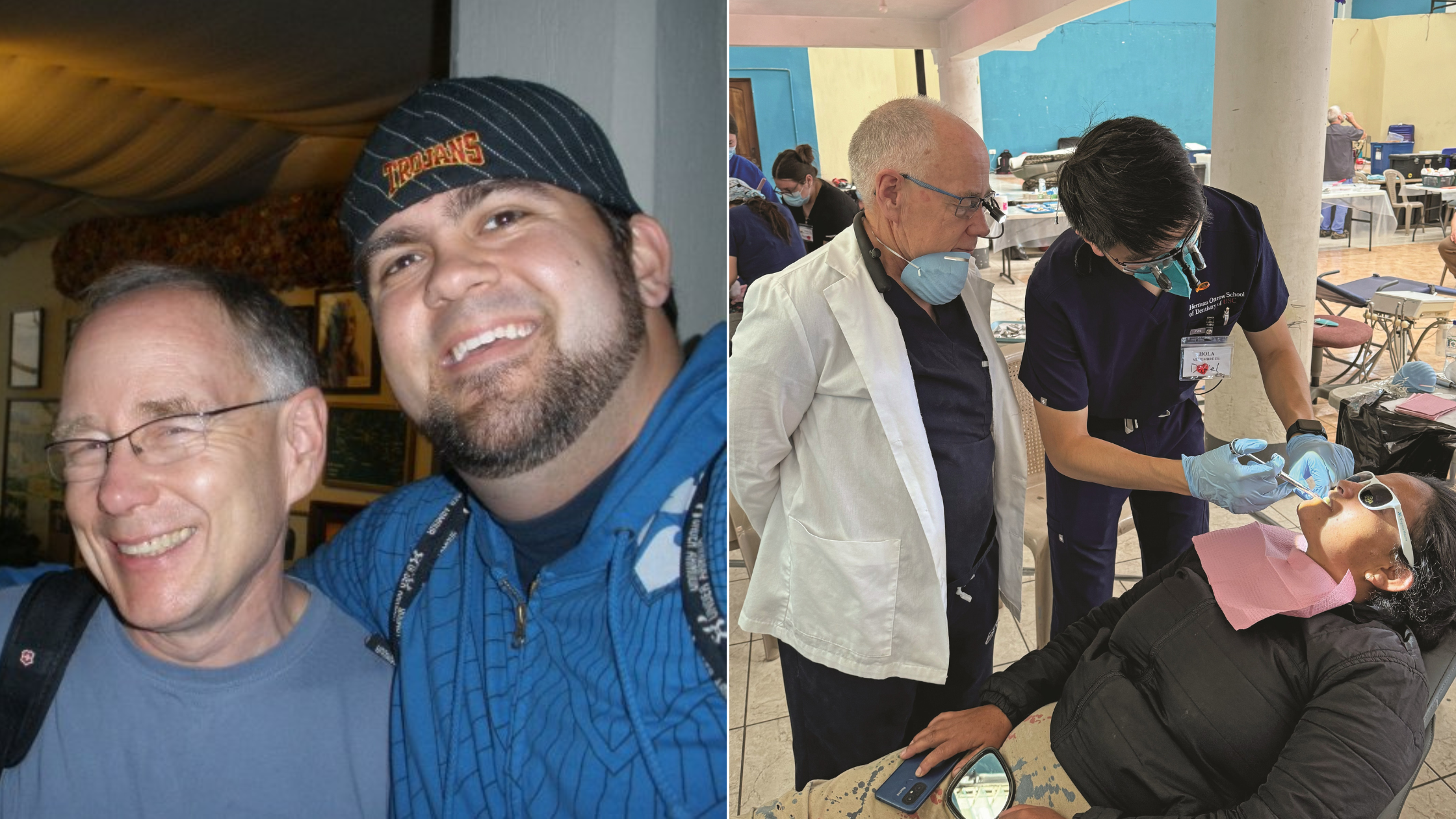
Left: Dr. Nordberg and Galloway. Right: Nordberg mentored dental mission participants.
A Family on a Mission
Over the course of nearly two decades, Kim Nordberg participated in many mission trips, primarily to Guatemala, but also to El Salvador. He used those missions as opportunities to treat people who otherwise would have had no access to dental care, to mentor dental students and early-career dentists, and to bond with his family as they saw the world together.
Daughter Maggie’s earliest memory of her father as a dentist comes from when the entire family accompanied him on one of those mission trips.
“I was in second or third grade, and he took our entire family to a remote region of Guatemala to serve those who had never seen a dentist. We all assisted in his clinic; I won’t ever forget those long days. He couldn’t turn people away. He was always trying to figure out how to get one more in the door,” she recalled.
Her sister Molly remembers handing out toothbrushes to the kids, and her dad making balloons out of dental gloves so they would laugh and warm up to him before he worked on them.
“When everyone had been taken care of for that day, my dad loved taking pictures of the families. They loved seeing themselves on the camera display too. Those pictures of the villagers are still displayed in his dental office to this day,” said Molly.
“When you go on these trips, what happens is that people find out that you’re doing free care, and they come from miles away and line up. The line is 500 people long, and you don’t want to turn people away. So you’re working 11 or 12-hour days to try to help people,” said Peder.
Brother Eric was older, but the experience was no less significant to him.
“We would spend Christmas and New Year’s in a little town in Guatemala, working out of a tiny two-chair dental clinic, and it was exciting,” he said. “It was also a little stressful, especially during my senior year in high school, when my AP calculus teacher told me I would not be able to pass the class if I was gone. But I eventually did. Yes, it was a challenge, but it taught me that good things are worth doing even if they come at a cost.”
"He couldn't turn people away. He was always trying to figure out how to get one more in the door."
One Nordberg who never completely embraced the world of mission trips was Bette. She “begrudgingly” — in son Peder’s words — participated in a couple of early visits. But after losing her luggage and being unable to purchase clothes in any nearby village on her first trip, it wasn’t long before she concluded that perhaps her best contribution to Kim’s mission work would be to take the younger children on a vacation of their own. So began a tradition that when future missions were planned, she often used the opportunity to plan her own vacations for a little relaxation and some much-needed sunshine.
“I think my mom deeply respected my dad’s heart for missions, but she also knew, after having attended some of those trips herself, that it wasn’t where her heart was,” said Eric.
“She wanted him to pursue his love of dentistry, his love of service, and his love of mentorship, but she also wanted to pursue the things that she loved to do. It was a mutually agreed-upon way to balance their two passions.”
A Valued Mentor
The lessons of those missions were not limited to the Nordberg family. Dr. Tristan Galloway, who is now a practicing dentist in Nampa, Idaho, first met Kim on a Guatemalan mission in 2007. Over the years, they participated in annual missions with the Christian Medical Dental Association from 2007 to 2024, missing only the 2020-2023 years.
“Dr. Kim was a mentor of mine for almost 20 years. I would text him or call him with questions or to seek advice, though if I called, I had to have ample time set aside for the phone call,” he said. “Even after he passed, I texted a few times as had been my routine. He is missed as a friend, mentor, father-figure, and role model.”
“Dr. Nordberg lived a life of service,” added Galloway. “He went into dentistry to help and serve people and God. He loved to mentor other dentists and dental students along the way. One thing I admired about him was his drive to be a lifelong learner. He wasn’t too proud to ask for advice or opinions, even from those he mentored.”
“Dad’s legacy continues, and will continue long after his passing.”
Another of Nordberg’s priorities for the mission work, according to Galloway, was maximizing its impact. That meant caring for as many patients as possible and focusing on care would that have the greatest impact in improving their lives.
“We were constantly working to improve our efficiency while in Central America. We wanted to be able to treat as many patients as possible. So part of our efficiency goals meant we constantly upgraded our technology. We had top-of-the-line X-rays, endo equipment, etc. We would strive to practice just as we would in the US,” said Galloway.
While every patient received high quality care in their humble clinic, Galloway says Nordberg had a special commitment to helping young women improve their smiles.
“Many of these teenage girls would come to our clinic with absolutely bombed out anterior teeth,” he recalled. “Kim would work extra to make sure each one of their front teeth was in order, no matter how long it took to restore.”
Just as the dental care received changed the lives for many Guatemalan patients, the dental care provided made life-changing impressions on many of the dentists and dental students who participated in these missions. Many dentists who began the trips as students have continued to travel to Guatemala for years. Even some of the patients who were treated in Guatemala have grown up to become dentists themselves and to accompany the mission teams.
“Dad’s legacy continues, and will continue long after his passing,” Eric said.
Despite Galloway’s understandable conclusion that “Dr. Kim’s passion reverberated throughout the mission work,” Peder Nordberg doesn’t believe that the trips were necessarily his father’s top passion in dentistry.
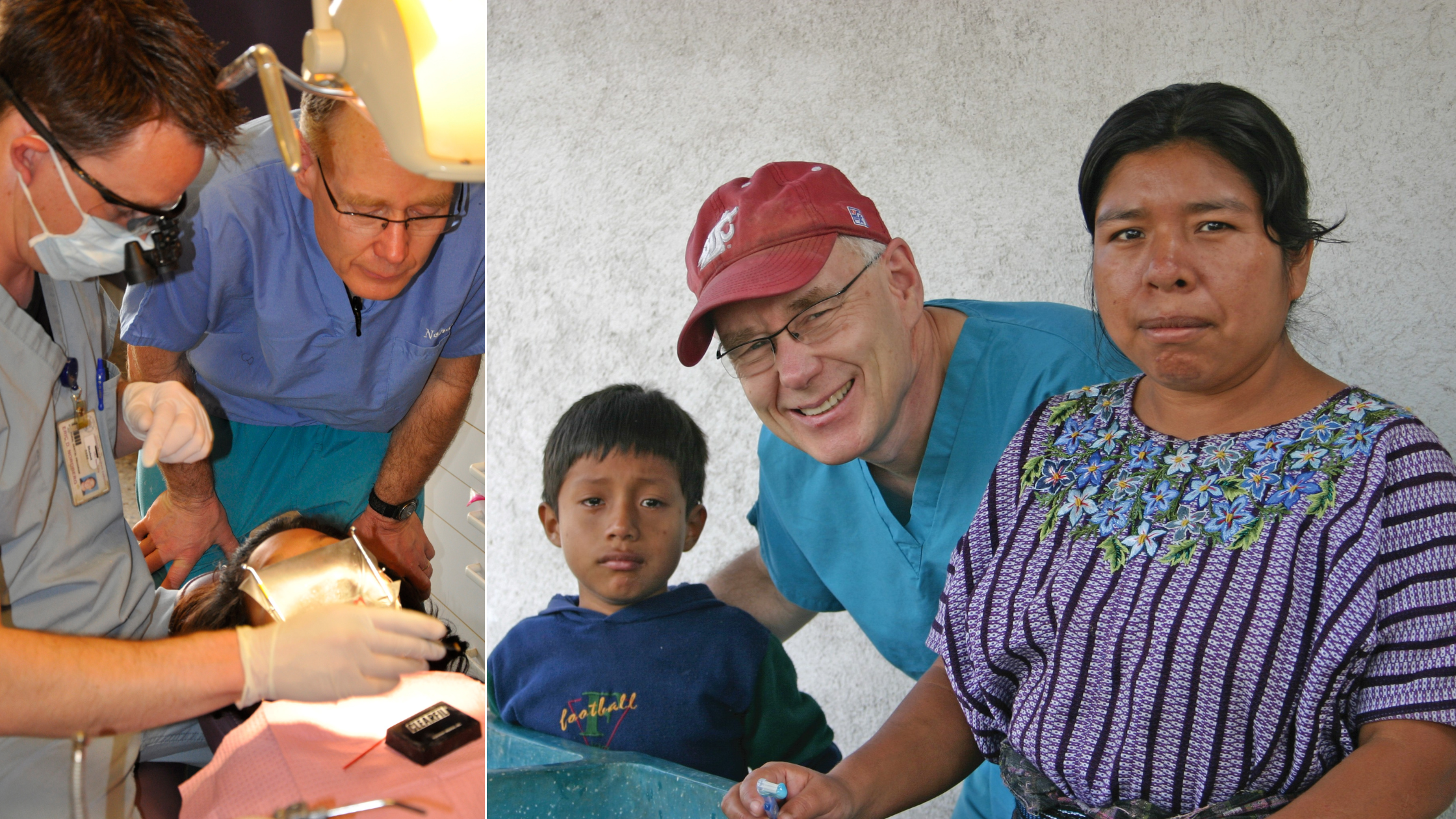
Left: Delivering some fatherly advice chairside. Right: Nordberg enjoyed a special connection with the people of Guatemala.
A Pillar of Organized Dentistry
“I think that protecting the dental profession and helping it continue to grow was probably his real mission in life, and his volunteer mission work was how he felt rejuvenated. It’s what he’d do to help uplift his spirit,” Peder said.
“His primary driving motivation really was to make dentistry seem like it had a future in helping people to not be controlled by insurance. Because I think he saw a lot of the way the industry is going as, ‘I can’t help you the way I would like to, because your insurance says you can do A, B and C, but you really need D,’” he added.
“I think my dad felt that there was an injustice that was done to the community of dentists, when Delta Dental of Washington was able to exert their influence and unilaterally lower reimbursement rates,” Eric said. “He felt that, considering how hard he and all of his colleagues worked, this wasn’t fair. It wasn’t fair to the community of dentists or to the patient population who were deprived of some of their treatment options. My dad wanted to serve his friends, both his patients and colleagues, to make the world of dentistry better.
“And he was especially encouraged to do so after my brother and I entered into the world of dentistry, because he wanted to leave the world of dentistry better for us and for all the dentists who would follow after him,” Eric added.
Based on his clear recognition of the inequities in the dental marketplace, over the years Nordberg emerged as a key leader in WSDA’s strategic advocacy on dental benefits reform.
“Kim’s quiet determination and commitment inspired me to pay more attention to many important issues impacting our profession,” said WSDA Immediate Past President Dr. Chris Dorow. “He was the first one to get me to focus on improving EOB statements and the dangers caused by insurance companies inserting themselves into the doctor-patient relationship. He was very intelligent and very wise; he had so much to offer and he wasn’t afraid to share his knowledge.
“So often, he was right on the money on where WSDA had to be on these issues. Fortunately, Kim’s kindness, authenticity, and integrity – they kind of oozed all over you, and you had no choice but to listen to him. Which was a good thing for all of us.”
"He wanted to leave the world of dentistry better for us and for all the dentists who would follow after him."
At the WSDA House of Delegates, Dorow recounted what he called “a small act of rebellion” performed by the WSDA Board of Directors after Nordberg’s death.
“We wanted to plant a tree outside the WSDA offices in his memory, but we couldn’t secure clear and complete permission to do that. We did it anyway,” said Dorow. “As a little icing on the cake, I found a Delta Dental EOB statement that was a great example of the frustrating language that drove Kim crazy. So, I shredded it and used it as a little extra fertilizer in the planting.”
After a year, the tree is thriving in its prominent location outside the Association offices. Dorow says that before every meeting in the building, he steals a glance at it and thinks of Kim, “hoping that it inspires future leaders the way he inspired me.”
A Man of Faith
Nordberg himself was inspired by his deep and abiding Christian faith.
During the Nordberg family’s early years, Kim and Bette met regularly with three other couples for two years in one another’s living rooms, while 14 children played nearby, and began planning for the creation of Lighthouse Christian Center. They began renting space for church services on Saturday night — leaving Sundays free for much-loved family ski outings — but later set their sights on building a church on a plot of land near SR-512 in the Puyallup area.
Kim assumed the role of general contractor, meeting with the property owners and eventually helping the church complete a purchase. Although Kim had no formal training in construction or serving as a general contractor, he began the process of coordinating the design and plans for a new church building. He spent hours at the property talking with architects, engineers, and subcontractors. He learned city code, sourced materials, and requested bids from all sorts of subcontractors. He did this all while working full time as a dentist.
That expertise would also be put to good use farther south. After being encouraged by friends to consider attending a family conference in Cannon Beach, Oregon, the Nordbergs began a four-decade tradition of participating in family camps and Kim began a long-running service on the board of directors of the Cannon Beach Conference Center, a Christian-based facility on the Oregon Coast.
During that time, Kim was intimately involved in a number of construction projects, including Pacific View Lodge, a new gym and classrooms, new staff dorms and, most recently, a new dining hall.
Peder summed up his father’s seemingly inexhaustible energy for these projects — as well as a long list of hobbies that included gardening, photography, boating, scuba diving, and tinkering with car, boat, and small tool engines — by saying, “He couldn’t sit still. He couldn’t just sit on a beach and read a book.”
“I think he also believed that as a part of his belief in Jesus Christ, that you’re supposed to go out and help your fellow man. And I think that was also a driving factor in his mission work and his church work, and why he made it such a big part of his life,” he said.

Nordberg was actively engaged in WSDA advocacy.
The Nordberg Legacy
Although they used different words and phrases in their descriptions, all four Nordberg children voiced similar themes when asked what they had learned from their parents. It all came down to the value of grit and hard work; determination to follow your passions; an abiding faith in God; an unwavering commitment to family; and a commitment to serve others.
Identifying these life lessons doesn’t make the task of following in their parents’ footsteps and living up to the example they set any easier for the Nordberg children. That challenge may be especially daunting for Eric and Peder, who are carrying on the family tradition in dentistry.
Peder said, “I do feel a lot of pressure to fill the proverbial shoes of my dad. As far as being committed as a dentist, there wasn’t anybody else. I’ve heard plenty of stories from patients that would say, ‘I wasn’t even his patient, but my son knocked his tooth out and your dad showed up on a Saturday and took care of us. And that’s why we’ve now been here for 30 years.’ Those are the kind of stories that I hear all the time. So, just in dentistry, I don’t think I could fill his shoes.”
Eric said receiving the award means a lot to their family, because it honors the legacy of their father.
“[The award] honors the deeply held perspective that Kim’s life was an act of service. Service to both the dentists that he considered friends and to the patient population that he considered friends and family,” Eric said.
“On one hand, Kim would still be Kim even if he never received this award. But on the other hand, I think it’s worthwhile to honor his deeply held convictions and his acts of service that spanned many decades."
To watch a short video profile of 2025 Citizen of the Year Dr. Kim Nordberg, go to wsda.org/2025COY.
To learn more about the mission work of the Christian Medical Dental Association, visit cmda.org.
This article originally appeared in Issue 4, 2025 of the WSDA News.
